

guide
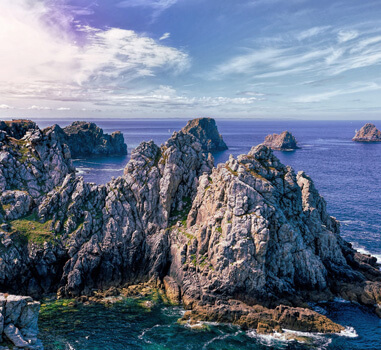
This complete guide to northern Finistère covers Brest and its Océanopolis aquarium, the Pointe Saint-Mathieu and its lighthouse, the Île Vierge lighthouse in the abers, Roscoff and Île de Batz, Morlaix and its bay, as well as the Monts d'Arrée and their Breton parish closes. It offers practical tips and excursion ideas for exploring this wild Brittany, between legendary lighthouses and fishing harbours.
Northern Finistère is one of Brittany’s most authentic destinations — a territory of heathland, cliffs, islands and abers where the edge of the world takes on full meaning. From Brest to Roscoff, from Pointe Saint-Mathieu to Morlaix Bay shores, doing things in northern Finistère means exploring wild and preserved Brittany, between mythical lighthouses, colorful fishing ports and white sand beaches. Here is the complete guide to all activities in northern Finistère for unforgettable Brittany vacations.
Brest is northern Finistère’s major town — legendary military port, town rebuilt after WWII and today a dynamic metropolis turned toward the sea. Brest Castle, a 17th-century fortress housing the Navy Museum, overlooks Brest harbor and offers an incomparable panoramic view of one of Europe’s most beautiful harbors. Oceanopolis, Brest’s ocean discovery park, is France’s largest aquarium — its three pavilions (polar, tropical, temperate) transport visitors to all marine ecosystems worldwide, an essential family activity in northern Finistère. Plougastel-Daoulas Peninsula, accessible from Brest via the Iroise bridge, is known for strawberry production and its chapel with 17,000 characters sculpted in black kersanton.
Brest harbor is also the departure point to explore the Glénan Archipelago, Crozon Peninsula and the great maritime spaces of northern Finistère in Brittany — cruises and boat trips are offered from Brest’s commerce port.
Claire’s tip: Visit Oceanopolis at Brest early in the morning and dedicate the afternoon to discovering Brest Castle and its view over the harbor — a full day for families in northern Finistère with practical info available at Brest’s tourism office.
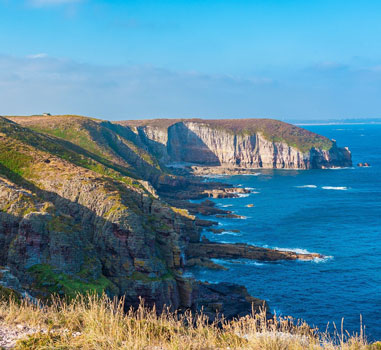
Pointe Saint-Mathieu at Plougonvelin is one of northern Finistère’s most striking sites — this promontory battered by Atlantic winds reunites over a few hectares a working lighthouse (37 meters, visit possible), Saint-Mathieu Abbey ruins (12th century) and a military signal station, all with commanding view over Brest harbor, Ouessant island and the Black Rocks reefs. Pointe Saint-Mathieu is 25 km from Brest — easily accessible in northern Finistère, it ranks among the most gripping maritime stops in all of Brittany. The coastal trail (GR34) borders the cliffs from Pointe Saint-Mathieu northward for several kilometers of breathtaking coastal panoramas. The sunset from Pointe Saint-Mathieu over the Atlantic and Iroise coast rocks is one of northern Finistère’s most beautiful.
Île Vierge Lighthouse, in northern Finistère’s abers, is Europe’s largest granite lighthouse (82.5 meters) and one of Brittany’s most majestic. Accessible by boat from Aber Wrac’h or from Plouguerneau, Île Vierge Lighthouse offers commented visits allowing climbing its 365 steps to the lantern room — the view from the summit over northern Finistère’s abers, coastal dunes and Iroise Sea is exceptional. Aber Wrac’h and Aber Benoît are estuaries (the “abers” in Breton) of wild beauty characteristic of northern Finistère — their wooded banks, anchored sailboats and oyster farms make the abers a sought-after sailing and navigation destination in Brittany.
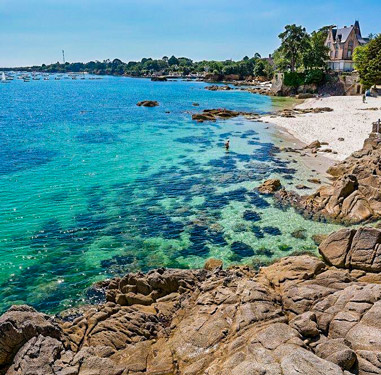
White Sands Beach of Locquirec (Morlaix Bay) and numerous wild beaches on the Abers coast in northern Finistère offer remarkable swimming conditions in summer.
Claire’s tip: To visit Île Vierge Lighthouse in northern Finistère, book the crossing from Plouguerneau or Aber Wrac’h in advance in July-August — boats fill quickly. The climb to the lighthouse summit is worth the trip: the view over abers and the northern Finistère coast is unforgettable, with info on lighthouse keeper history in Brittany.
Roscoff is northern Finistère’s coastal gem — this fishing and pleasure port with 16th-century pink granite houses is one of Brittany’s most beautiful small towns. Its Notre-Dame-de-Kroaz-Baz church (bell tower, Renaissance steeple), Roscoff’s exotic garden (its winter fig trees and agaves testify to Gulf Stream mildness) and northern Finistère thalassotherapy make it an incomparable cultural and wellness stop. Roscoff port is also the gateway to Ireland and England — daily maritime connections from Roscoff to Plymouth and Cork make Roscoff an international crossroads in northern Finistère.
Batz island, accessible in 15 minutes by boat from Roscoff port, is a preserved natural space in northern Finistère — its fine sand beaches, its lighthouse (tower visit, Morlaix Bay panorama), its colonial garden and absolute tranquility make it the ideal island for a relaxation day in Brittany.
Morlaix is northern Finistère’s medieval town — its 58-meter railway viaduct spanning Morlaix river valley is northern Finistère’s most photographed monument. Old Morlaix with its pondalez houses (half-timbered houses with interior balcony characteristic of the area), stair alleys and Morlaix museum (Breton art and archaeology collections) merit half a day during a northern Finistère circuit. Morlaix Bay offers several islands and islets — Louet island and Taureau Castle (17th-century island fortress guarding bay entrance) are accessible by boat from Carantec, for spectacular guided visits in northern Finistère.
Callot Island, connected to Carantec at low tide by a walkable passage (watch tidal schedules!), is a northern Finistère island accessible on foot across sand — its chapel, blockhouses and wild beaches make it an unusual excursion in Morlaix Bay.
Claire’s tip: To reach Callot Island at low tide from Carantec in northern Finistère, consult tidal tables in advance and bring boots — the beach passage is passable 2 hours before and 2 hours after low tide. A unique Brittany excursion in a preserved natural setting of northern Finistère, with info available at Carantec’s tourism office.
Monts d’Arrée are Finistère’s mountain massif — their endless heathlands, bogs and summits (Roc’h Trédudon, 385 meters) offer unique hikes and panoramas in Brittany, in a preserved natural setting free from urbanization. Inland northern Finistère around Monts d’Arrée is equally rich in heritage: Breton parish enclosures (Saint-Thégonnec, Guimiliau, Sizun) classified as historic monuments and representing 16th-17th century Breton art’s pinnacle. These enclosures with their monumental calvaries, ossuaries and triumphal gates are essential cultural activities in northern Finistère for any Brittany and history enthusiast.
Menez Hom (330 meters), at the border between northern Finistère and Crozon Peninsula, is Finistère’s natural lookout point — 360° panorama over Brest Bay, the Crozon Archipelago islands and Monts d’Arrée.
Pont-Aven is Finistère’s painters’ town — Paul Gauguin and the Pont-Aven school (late 19th century) revealed to the world the beauty of Breton landscapes in this village nestled in Aven valley. Pont-Aven’s museum (Pont-Aven school collections, Gauguin, Émile Bernard, Sérusier) and numerous art galleries at Pont-Aven port make this Finistère town Brittany’s artistic capital. Painting and watercolor studios in Pont-Aven and northern Finistère let visitors initiate themselves to artistic creation in the landscapes that inspired Gauguin — studios adapted to all levels, from children to adults.
Quimper, Finistère’s prefecture, at the border between northern and southern Finistère, also merits a day — its Saint-Corentin Cathedral (Gothic, the only one in Brittany with a bent nave), its Quimper earthenwares and Cornouaille Festival (Celtic folk, late July) make Quimper a major Finistère cultural destination.
Northern Finistère campings — between Brest, Roscoff and Morlaix Bay — offer water parks with heated pools in a preserved Brittany natural setting. A camping stay in northern Finistère allows easy exploration of all sites: Pointe Saint-Mathieu, Île Vierge Lighthouse, Callot Island at low tide, Morlaix and its activities, the abers and northern Finistère’s coastal trail. Northern Finistère’s wild beaches, mythical lighthouses and preserved islands in Morlaix Bay make northern Finistère one of Brittany’s most beautiful nature camping destinations.
The best activities in northern Finistère are: visiting Océanopolis and Brest castle, the Pointe Saint-Mathieu (abbey and lighthouse), the Île Vierge lighthouse from the Aber Wrac'h, Roscoff and Île de Batz, Île de Callot at low tide from Carantec, the Château du Taureau in Morlaix bay, the parish closes, and the Monts d'Arrée. The coastal path (GR34) in northern Finistère is also a must-do hike in Brittany.
Île de Callot at Carantec in northern Finistère is accessible on foot at low tide - a sandy crossing passable 2 hours before and 2 hours after low tide. Check the tide tables before crossing. Île de Callot can also be paddled around by kayak from Carantec. Practical information on low tide times is available from the tourist office of northern Finistère.
Yes, the Île Vierge lighthouse in the abers of northern Finistère can be visited - reached by boat from Plouguerneau or the Aber Wrac'h, it offers guided tours letting you climb its 365 steps. The view from the top over the abers and the northern Finistère coast is outstanding. Book ahead in July-August.
Roscoff in northern Finistère is worth half a day: the historic fishing harbour, Notre-Dame-de-Kroaz-Baz church, an exotic garden, and Île de Batz by boat (15 minutes from Roscoff harbour). Roscoff is also the gateway to Morlaix bay and an ideal base for exploring the sights of northern Finistère in Brittany.
Yes, several 3- to 5-star campsites offer water parks in northern Finistère - in Brittany between Brest, Roscoff and Morlaix bay. These campsites with heated pools let you enjoy the beaches and preserved natural setting of northern Finistère even on rainy Breton days, while branching out to all the must-see sites: Pointe Saint-Mathieu, the Île Vierge lighthouse, Île de Callot and Morlaix.