

guide
This guide reveals the must-sees of the Provençal Drôme: the château de Grignan and its Fêtes Nocturnes, Montélimar nougat, Nyons's AOC olive oil, the hilltop villages of Poët-Laval and Montbrun-les-Bains, the Palais Idéal du Facteur Cheval in Hauterives, and the Baronnies Provençales around Buis-les-Baronnies. It details prices and practical tips for a stay combining heritage, gastronomy and lavender.
Drôme Provençale is one of the most appealing territories in Provence – a region of southern France where the white limestone of the Baronnies Provençales is covered with lavender fields, where hilltop villages ranked among France‘s most beautiful seem to defy gravity, and where Montélimar nougat perfumes markets. In Drôme Provençale, Grignan Castle, the Ideal Palace of Postman Cheval, Montbrun-les-Bains thermal baths and Nyons AOC olive oil form exceptional heritage in a preserved natural setting. This complete guide reveals the must-sees – with prices, best visiting hours and local secrets – for unforgettable vacations in Drôme Provençale.
Grignan Castle is Drôme Provençale‘s most emblematic monument – this Renaissance fortress dominating Grignan village from 82 m height is one of southern France‘s largest Renaissance castles, and one of the most beautiful in the region‘s heritage. Marquise de Sévigné (Madame de Sévigné) stayed here at length, whose famous letters to her daughter (Countess of Grignan) constitute one of 17th century French literature’s masterpieces. Grignan Castle visit (9 euros adult, 6 euros child, 1-1.5 hour duration) includes state rooms, panoramic terrace (views of Mont Ventoux and Baronnies Provençales) and Romanesque crypt. In July, Grignan Night Celebrations (sound and light shows in castle courtyard, 22 euros adult) are one of the most beautiful outdoor shows of the Auvergne-Rhône region.
What guides don’t mention: best tickets for Night Celebrations sell out in March – July performances often fully booked by April. Also visit Grignan village on Tuesday morning for the Provençal market (8 a.m.-1 p.m.) at castle foot.
Claire’s tip: Climb to Grignan Castle on foot from Grignan village via Montant-au-Château street (10 min, paved stairs) rather than driving – the view of lavender fields and Baronnies Provençales villages below from the castle terrace is breathtaking.
Montélimar is the world nougat capital – this Drôme city at the Rhône and Roubion confluence is celebrated since the 17th century for its almond and lavender honey Montélimar nougat. Montélimar‘s Candy and Nougat Palace (interactive museum on nougat and sweets history, 7 euros adult) and Arnaud Soubeyran shops (oldest Montélimar nougat maker, founded 1837) on 45th Parallel Avenue merit an essential gourmet stop in Drôme Provençale. Authentic Montélimar nougat (PGI) must contain at least 28% almonds and 25% honey – beware imitations sold on highways. Arnaud Soubeyran factory offers free workshop visits (Monday-Friday, booking advised) – a fascinating experience watching nougat hand-made.
Nyons is olive and olive oil capital in Drôme Provençale – the Tanche Nyons variety is the only table olive and AOC oil of the region, recognized since 1994. Visiting Nyons olive mills (Autrand-Dozol mill, 2 euros adult, open November to March during pressing season) lets you discover traditional Nyons olive oil making – a unique sensory experience in Drôme. Nyons‘s Thursday morning market (8 a.m.-1 p.m., Arcades Square) is one of most colorful and lively in Drôme Provençale – Nyons olives, Baronnies sheep cheeses, lavender, Provence herbs and local products. Nyons is also known for its 14th century Roman bridge (Eyrieux Bridge) and medieval alleyways of the Forts quarter – a Nyons city walking visit lasts about 1.5 hours.
Poët-Laval is one of Drôme Provençale‘s most beautiful classified villages – this hilltop village on a Baronnies Provençales rocky outcrop, former Hospitallers of Saint-John of Jerusalem commandery, counts among France‘s most picturesque villages with its blonde stone medieval alleys, towers and Romanesque church. Visit is free – the panorama from the castle terrace over Jabron valley and Baronnies Provençales is unforgettable.
Montbrun-les-Bains is the thermal village of Baronnies Provençales – its spiral alleys spiraling around the ruined medieval castle and thermal facilities (sulfured waters, 3-week cures) make it one of Drôme Provençale‘s most original hilltop villages. Montbrun-les-Bains summer market (every Sunday) is the chance to discover Baronnies products – lavender, linden, honey and region olive oil. Montbrun-les-Bains village visit is free – plan 1 hour for complete loop.
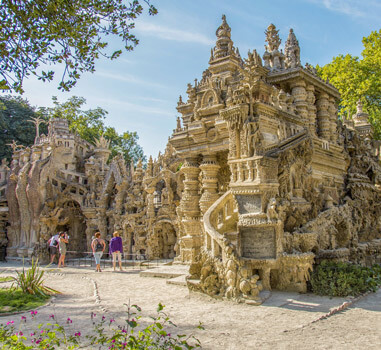
Ideal Palace of Postman Cheval at Hauterives, 40 km north of Montélimar, is one of Drôme‘s most unusual and fascinating monuments – this monumental architectural construction (24 m long, 12 m high) created 1879-1912 by postman Ferdinand Cheval with stones collected during his rounds is classified historic monument since 1969. Ideal Palace of Postman Cheval is a unique work in France and worldwide – its galleries, towers and sculptures representing deities, world architectures and fantasy animals were created without any artistic or architectural training. Visit: 8.50 euros adult, 5.50 euros child – allow 1.5 hours to appreciate all details of this raw masterpiece.
Claire’s tip: Visit Ideal Palace of Postman Cheval outside July-August (May, June or September) – waiting is practically nonexistent and you can photograph sculptures without crowds. Morning (before 10 a.m.), grazing light reveals all low-relief details that noon sun erases.
Buis-les-Baronnies is Baronnies Provençales capital – this small city nestled in a mountain cirque of Drôme Provençale is known for linden production (it supplies 80% of French linden), olives and aromatic herbs. Its Wednesday morning market (Market Square) is one of Provence’s most authentic markets – spices, herbs and Baronnies oils in abundance. Baronnies Provençales regional nature park (regional nature park created 2015) protects extraordinary Baronnies landscapes – its 1,800 km of hiking trails allow exploring villages and limestone ridges of this preserved region of Drôme Provençale on foot.
Pierrelatte’s Crocodile Farm, 30 km south of Montélimar in the Rhône valley, is Europe‘s largest tropical greenhouse – its 400 Nile crocodiles and numerous exotic reptile and bird species make this visit an essential family stop in Drôme. Entry: 16 euros adult, 11 euros child.
Suze-la-Rousse Castle (12th-16th centuries), medieval fortress classified historic monument, has housed the Wine University since 1978 – the only wine teaching institution in a castle in France. Short training and tasting initiations for enthusiasts are offered at Suze-la-Rousse Castle (half-day oenology, 45 euros per person) – a unique experience in Drôme Provençale. The Tricastin region around Suze-la-Rousse produces appreciated IGP Mediterranean wines – local producer caves offer free tastings.
The Papal Enclave (Valréas and three communes of Vaucluse enclosed in Drôme) is unique geographic curiosity in France – this papal territory since the 14th century preserves strongly marked Provençal identity with its markets, festivals and Little Saint-John Night (torch procession at Valréas, late June, free entry).
Drôme Provençale campsites offer water parks with heated pools in a vineyard, olive tree and lavender field setting typical of Rhone-Provence. A Drôme Provençale camping stay allows exploring all must-sees within 45 minutes: Grignan Castle and Night Celebrations, Ideal Palace of Postman Cheval, Nyons and its olive market, Baronnies Provençales hilltop villages (Poët-Laval, Montbrun-les-Bains) and Montélimar nougat. Drôme Provençale offers sunny weather May to October – ideal for family camping vacations with water parks.
The must-sees of the Provençal Drôme are: the château de Grignan (and its Fêtes Nocturnes in July), Montélimar nougat (the Arnaud Soubeyran factory, the Palais du Bonbon et du Nougat), Nyons and its AOC olive oil, the Palais Idéal du Facteur Cheval in Hauterives, the hilltop villages of Poët-Laval and Montbrun-les-Bains, and the Baronnies Provençales regional nature park. The Provençal Drôme is perfect for a sunny holiday in France with exceptional heritage.
The château de Grignan can be visited all year round (€9 adults). The Fêtes Nocturnes (shows in the castle courtyard) take place in July - book in March, as performances sell out quickly. Grignan's market takes place on Tuesday mornings at the foot of the château. Outside July-August, visiting the château means no queues and a calmer atmosphere, with a clear view over the lavender fields of the Baronnies Provençales.
Yes, Montélimar nougat has been made in Montélimar since the 17th century - the Arnaud Soubeyran factory (founded in 1837) offers free tours of its workshop on weekdays. The Palais du Bonbon et du Nougat (€7 adults) traces the history of this gastronomic heritage of the Drôme. Genuine Montélimar nougat (PGI) contains at least 28% almonds and 25% honey - check the label.
The Baronnies Provençales are a limestone massif in the Provençal Drôme, protected by a regional nature park created in 2015 - 1,800 km of hiking trails, listed hilltop villages (Poët-Laval, Montbrun-les-Bains), exceptional agricultural produce (olive oil from Nyons, lime blossom from Buis-les-Baronnies, lavender), and proximity to Mont Ventoux. The Baronnies Provençales regional nature park can be reached from Nyons or Buis-les-Baronnies in the Provençal Drôme.
Yes, the Provençal Drôme offers 3- to 5-star campsites with water parks and heated pools - set amid Rhône-Provençal scenery with vineyards, olive trees and lavender fields. These campsites in the Drôme are ideally located for exploring Grignan, Nyons, Montélimar and the hilltop villages of the Baronnies Provençales, offering a complete Provençal Drôme holiday for the whole family.