

guide
This guide offers a complete overview of the Drôme: Valence and its gastronomy, the Tour de Crest (France's largest keep), the Palais Idéal du Facteur Cheval in Hauterives, the villages of the Provençal Drôme (Nyons, Grignan, Suze-la-Rousse), Clairette de Die in the Drôme valley, Montélimar nougat, the Ferme aux Crocodiles in Pierrelatte, and the Vercors regional nature park. It offers itinerary and family activity ideas for a complete Drôme stay.
Drôme is one of the most charming departments in Auvergne-Rhône-Alpes — a territory of multiple faces that combines the gentleness of Drôme Provençale, Vercors summits, Valence gastronomy and the curiosities of Drôme valley. Between weekly market with southern flavors, guided visit of the Crest keep, excursion to the Palais idéal of Postman Cheval and Clairette de Die tasting in the valley, the activities to do in Drôme enchant all generations. This complete guide reviews the must-sees for a weekend in Drôme or an extended stay.
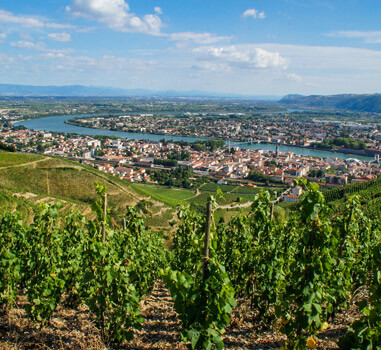
Valence is the prefecture and cultural capital of Drôme — a town of character placed between Vercors and Provence, on the left bank of the Rhône. The Valence Museum (fine arts and archaeology, in the former episcopal palace) is one of the Auvergne-Rhône-Alpes region’s richest. Saint-Apollinaire Cathedral, the Pendentif (unique Renaissance monument in France) and the half-timbered houses of old Valence merit a thorough guided visit.
Valence is also Drôme’s gastronomic capital: Anne-Sophie Pic directs the Maison Pic there, one of France’s most starred restaurants. The Thursday morning market on Republic Square is one of Drôme’s most beautiful weekly markets — local producers, fruits, vegetables and valley cheeses gather there. The central Valence square and its terraces are ideal for lunch after a market.
Claire’s tip: In Valence, don’t miss the Kiosk Peynet on the Champ de Mars esplanade — this little Belle Époque pavilion inspired Raymond Peynet’s famous lovers. And if you like concerts and exhibitions, check the Valence Romans Agglo calendar: Drôme’s cultural calendar is particularly rich from September to June, with shows and exhibitions in the town’s heritage venues.
The Crest Tower is one of Drôme’s most impressive monuments — France’s largest medieval keep (52 meters high), classified as a historic monument, overlooking Crest town and Drôme valley. This 12th-century stone colossus served in turn as a lordly residence, state prison under Louis XIV (Huguenots and Jansenists were confined there) and essential visit site since the 19th century.
The visit to Crest Tower includes a climb of 200 steps rewarded by an exceptional panorama over Drôme, Vercors and the Alps. Graffiti carved in stone by prisoners over centuries constitute unique historical testimony. Crest Tower, a historic monument listed, is open April through November. A guided visit of Crest and its keep takes 2-3 hours.
Claire’s tip: Crest Tower is one of Drôme’s most striking guided visits. Climb to the top of the keep on clear days to see the Alps — the view over Drôme valley and Drôme Provençale hills is extraordinary. Combine with a stroll through Crest’s medieval alleys and a meal by the Drôme river.
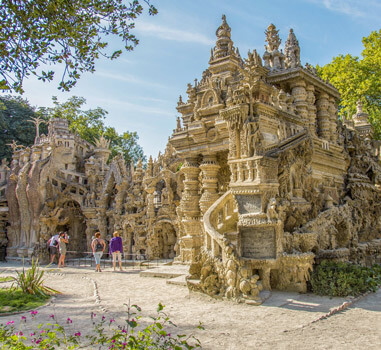
Postman Cheval’s Ideal Palace at Hauterives is one of France’s most singular monuments — and one of naive art’s world masterpieces. Ferdinand Cheval, rural postman of Drôme, built alone for 33 years (1879-1912) this stone and cement palace with delirious forms, inspired by his readings and postal rounds. This postman’s ideal turned builder is classified as a historic monument since 1969, on André Malraux’s proposal.
Postman Cheval’s Ideal Palace is Drôme’s most original tourist attraction: an unclassifiable work, between Hindu temple, medieval castle and Asian pagoda, decorated with hundreds of cement sculptures. A fascinating visit for the whole family, from age 5. Plan 1 to 2 hours on-site.
Drôme Provençale is Drôme’s southernmost part — a land of lavender, olive trees and perched villages with decidedly Provençal atmosphere. Several towns there deserve a stop.
Nyons is Drôme’s olive capital — its olive oil benefits from unique AOP status in France (only table olive and AOP olive oil in a cold region). The Thursday morning weekly market at Nyons is one of Drôme Provençale’s most colorful: olives, cheeses, honey, lavender and local products in abundance. The medieval Arcades square of Nyons and its Roman bridge are the perfect photo settings.
Grignan and its castle — where Madame de Sévigné stayed — is one of Drôme Provençale’s most beautiful villages. Guided visits to Grignan castle (summer festival theater) allow discovering 17th-century living in an extraordinary lavender and white stone setting.
Suze-la-Rousse houses the Wine University in a remarkable medieval castle — a unique institution for learning to taste the great wines of Drôme and the Rhône valley.
Claire’s tip: For a weekend in Drôme Provençale, start at Nyons in the morning (Thursday weekly market, visit Grignan castle in the afternoon and finish at Suze-la-Rousse for sunset tasting. An ideal program to feel the soul of deep Drôme.
Drôme valley between Crest and Die is one of the department’s most secretive wine regions. Clairette de Die — AOP — is a white sparkling wine, lightly muscat, produced only in this valley according to a unique ancestral method. Sweet and fruity, Clairette de Die is Drôme’s celebration wine: a glass of Clairette by the Drôme riverside is one of the region’s simple yet memorable pleasures.
Die, the Clairette capital, merits a visit for its Roman arenas, cathedral and Clairette de Die cellars. The Saturday weekly market at Die is a fine introduction to this preserved valley.
Montélimar is Drôme’s nougat town — this confection made from almonds, honey and egg white has been manufactured there since the 17th century. Montélimar nougat shops rival in creativity and manufacturing workshop visits let you discover nougat manufacturing secrets. The Candy and Nougat Palace at Montélimar is a fun attraction for families, with tasting and regional confection history.
Drôme abounds with other local specialties: Drôme tangerines (IGP), Tricastin hillsides (AOP), Dauphiné ravioli and the royal handful of Romans-sur-Isère.
The Crocodile Farm at Pierrelatte is Europe’s largest crocodilian farm — an unusual Drôme attraction fascinating young and old. 400 crocodiles and alligators of 25 different species evolve in heated tropical greenhouses at 30°C, recreating an equatorial environment in Drôme’s heart. An essential visit for families, with crocodile feeding on weekends.
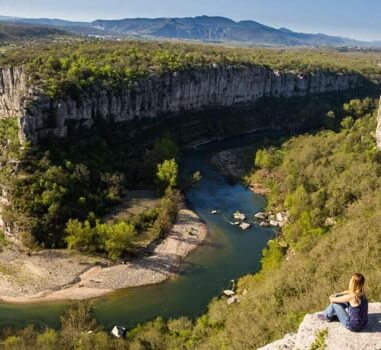
The Vercors Regional Natural Park occupies northwestern Drôme — a limestone plateau with wild landscapes of cliffs, forests and gorges. The Bourne gorges, Vercors high plateaus (Corrençon, Villard-de-Lans) and Romans-sur-Isère quarries offer exceptional nature activities: hiking, cross-country skiing in winter, climbing, mountain biking and caving.
The Provençal Baronies Regional Natural Park, further south in Drôme, protects 186,000 hectares of Mediterranean landscapes around Montbrun-les-Bains — a remarkable perched thermal village, classified among France’s Most Beautiful Villages. Montbrun-les-Bains and its thermal baths, spiral alleys and panoramas over the Baronies merit a stop during your stay in Drôme.
Drôme is an ideal family destination. Pierrelatte’s Crocodile Farm fascinates from age 3. Postman Cheval’s Ideal Palace at Hauterives amazes young and old. Crest Tower (keep climb) pleases children curious about history. The weekly markets of Nyons, Die and Valence introduce children to local flavors.
Concerts, exhibitions and shows from the Drôme calendar enliven the entire season: the Grignan Festival (outdoor theater in the castle) is one of Drôme’s most beautiful open-air spectacles. Check the Drôme calendar before your stay so you don’t miss anything.
Drôme offers varied camping options, notably in Drôme Provençale, Drôme valley (between Crest and Die) and around Valence. 3-to-5-star campings offer water areas with heated pools and slides — ideal for combining cultural visits and family relaxation. Drôme river, with turquoise waters, is one of Auvergne-Rhône-Alpes’s most appreciated whitewater swimming sites.
Claire’s tip: For a successful weekend in Drôme, settle into a camping in Drôme valley (Crest-Die sector): you will be in the heart of deep Drôme, within reach of Crest keep, Clairette de Die and the valley‘s weekly markets. Drôme river at the campsite’s foot completes the picture. Consult our selection of campings with water parks in Drôme.
The Drôme's must-sees are: the Tour de Crest (France's largest keep, a historic monument), the Palais Idéal du Facteur Cheval in Hauterives, the Provençal Drôme (Nyons, Grignan, Suze-la-Rousse), the Ferme aux Crocodiles in Pierrelatte, Clairette de Die in the Drôme valley, and the Vercors regional nature park.
The Tour de Crest (medieval keep, historic monument) is open from April to November. Guided tours are offered in season. The climb up 200 steps is manageable from age 8 and rewards visitors with a panoramic view over the Drôme valley, the Vercors and the Alps.
Clairette de Die is a sparkling white PDO wine produced in the Drôme valley between Crest and Die, using a unique traditional method. Lightly musky and sweet, it's the Drôme's signature aperitif. Cellar tours in Die are organised in season to discover the production secrets of this Drôme sparkling wine.
Yes, the Palais Idéal du Facteur Cheval in Hauterives is open all year round (except a few days in January). This unique historic monument, built single-handedly by Ferdinand Cheval from 1879 to 1912 and listed by André Malraux, is the Drôme's most original tourist attraction. Allow 1 to 2 hours for the visit.
Yes, particularly in the Drôme valley (Crest-Die area) and in the Provençal Drôme. 3- to 5-star campsites offer water areas with pools and slides, often on the banks of the turquoise Drôme river. Check out our selection of campsites with a water park in the Drôme.