

Saint-Malo in 8 places between ramparts and open sea
Published on updated: - 7 min read - By Théo Mercier-Balaz
Contents
A walled city set upon the sea, Saint-Malo built its legend on privateers, forts and some of the strongest tides in Europe. The walled city of Saint-Malo is best explored on foot, between ramparts battered by sea spray and granite streets rebuilt after the war. Wondering what to do in Saint-Malo with the family, between maritime history and swimming?
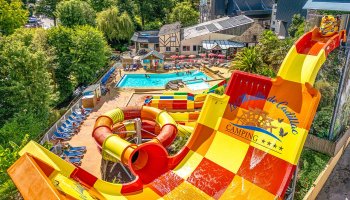
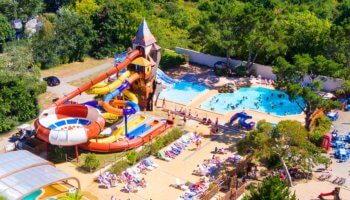
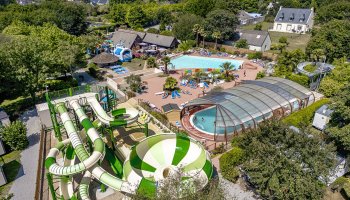
Our selection of eight places will help shape your stay, with a campsite with a water park as a comfortable base right by the Channel.
The ramparts: a 2km walk above the waves
Symbol of the privateer city, the ramparts entirely encircle the Intra-Muros district for nearly two kilometres. The walk, free and open to everyone, offers an unbroken panorama over the sea, the beaches and the islets scattered across the bay. Walking the ramparts is every visitor’s first move: children love spotting the offshore forts, while the tides reshape the scenery hour by hour.
Visitors’ favourite moment: the sunset from the western ramparts, facing the Grand Bé.
Practical information:
- The ramparts can be freely accessed from several staircases around the old town.
- The full loop takes about an hour of unhurried walking.
- The route is free and open all year round.
Fort National: the Vauban-style fortress accessible at low tide
Built in the 17th century along plans inspired by Vauban, Fort National stands on a rocky islet facing the ramparts. Its original mission was to defend the city against attacks from the sea. It can only be reached at low tide, on foot from the beach, which adds to the charm of the visit. Once there, the view over the ramparts and the bay rewards the crossing. The guided tour sheds light on the city’s turbulent military history.
Visitors’ favourite moment: walking across the sand exposed by the outgoing tide.
Practical information:
- Access depends on the tides — check the times each day before you set off.
- The fort can only be visited on a guided tour, in season.
- Wear suitable footwear for walking on the rocks and sand.
The Grand Aquarium: 600 marine species to discover
A little outside the centre, the Grand Aquarium in Saint-Malo ranks among the most visited sites in the region. The immersive route travels through the world’s oceans and features more than 600 marine species. Attractions such as the Anneau des Mers, a circular shark tank, and the Nautibus, a submarine that dives among the fish, delight visitors of all ages. It’s a safe bet on rainy days, when the wind makes the ramparts less inviting. Allow a good half-day to see it all!
Visitors’ favourite moment: the Anneau des Mers, where sharks circle all around visitors.
Practical information:
- The aquarium is located on Avenue du Général Patton, outside Intra-Muros.
- The visit takes an average of two to three hours.
- The site is open all year round, with extended hours in summer.
The castle and the city’s history museum
Built by the Dukes of Brittany in the 15th century, Saint-Malo Castle watched over the sea as much as over the Malouins themselves. It now houses the town hall and the city’s history museum. The collections retrace the saga of the privateers, the great navigators and the cod fishermen who set sail for Newfoundland. From the top of the keep, the view sweeps over the slate rooftops and the bay. The visit pairs perfectly with a walk along the nearby ramparts.
Visitors’ favourite moment: climbing to the top of the keep for its panorama over the walled city.
Practical information:
- The castle stands at the entrance to Intra-Muros, by the Porte Saint-Vincent.
- The museum visit takes around an hour.
- Opening hours vary by season — check before you visit.
Saint-Vincent Cathedral: Romanesque and Gothic side by side
Founded in the 12th century by Jean de Châtillon, Saint-Vincent Cathedral blends Romanesque and Gothic art through its successive extensions. Badly damaged during the bombing raids of August 1944, it underwent a long reconstruction, most notably its contemporary stained-glass windows that flood the nave with colour. This is where Jacques Cartier was blessed before setting off for Canada. The contrast between the ancient stone and the modern glasswork makes it a uniquely peaceful place at the heart of the old town.
Visitors’ favourite moment: the coloured light from the modern stained-glass windows falling across the stone columns.
Practical information:
- The cathedral is located in the centre of Intra-Muros, within walking distance.
- Admission is free, out of respect for this place of worship.
- The visit takes around twenty minutes.
Le Grand Bé: the islet with Chateaubriand’s grave
Reachable on foot at low tide from Plage de Bon-Secours, Le Grand Bé is a rocky islet that holds the grave of the writer François-René de Chateaubriand, facing out to sea. The walk, paced by the tides, offers a superb view over the ramparts and the bay. This timeless moment is best savoured at sunset. Do keep an eye on the tide times, though, so as not to be caught out by the incoming sea.
Visitors’ favourite moment: Chateaubriand’s simple grave, facing the ocean he so cherished.
Practical information:
- Access is only possible at low tide, from Plage de Bon-Secours.
- Crossing over and touring the islet takes around an hour.
- Be sure to check the tide times before setting off.
Tour Solidor: the Cape Horners’ museum
Standing in the Saint-Servan district, Tour Solidor is made up of three adjoining turrets, built in the 14th century to control the Rance estuary. Since 1970 it has housed a museum devoted to the long-distance sailors who rounded Cape Horn. Ship models, objects brought back from their voyages and seafaring tales recount these extreme expeditions to South America. The tower’s position at the mouth of the Rance guarantees a fine view over the barrage and Dinard.
Visitors’ favourite moment: the models of three-masted ships that braved the storms off Cape Horn.
Practical information:
- The tower is located in the Saint-Servan district, away from Intra-Muros.
- The museum visit takes around three-quarters of an hour.
- Opening hours vary by season.
Grande Plage du Sillon: sand facing the open sea
Stretching several kilometres, Grande Plage du Sillon runs along the town between the sea wall and the sea. Its wooden breakwaters planted in the sand make it instantly recognisable. At low tide, the vast expanse of sand is perfect for walking, sand yachting and beach games. At high tide, waves crash against the sea wall during spring tides, a much-photographed sight. It’s the ideal spot for a swimming break between two dips into Saint-Malo’s heritage.
Visitors’ favourite moment: the waves bursting over the sea wall on days of spring tides.
Practical information:
- The beach runs along the seafront, within walking distance of Intra-Muros.
- Swimming is supervised in summer on certain sections.
- Check the tidal coefficients before settling in near the sea wall.
Now you know what to do in Saint-Malo, from the privateer ramparts to the beaches of Le Sillon. Where should you set up base to move freely between the city and the bay? Book your stay at a campsite with a water park in Saint-Malo and give your children a heated pool for when the Channel gets too chilly.
FAQ - What to Do in Saint-Malo?
Frequently asked questions

Related articles
Nos campsites with water park — Bretagne
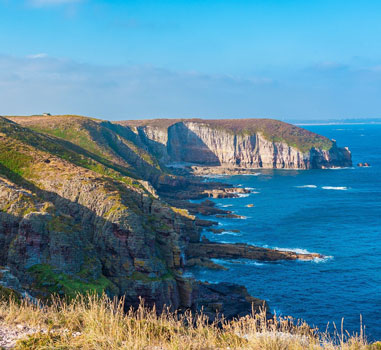
Feel like staying here? Here are some water park campsites to discover to extend the experience.