

guide

Luberon embodies Provence in its most authentic form. Perched villages, lavender fields, ochre cliffs and colorful markets make up a unique setting. Are you looking for what to do in Luberon for your next vacation? The regional natural park, which covers more than 180,000 hectares, offers an immense playground between nature, heritage and art of living.
From a camping with water park nearby, you enjoy ideal access to all these treasures. Here is our selection of the 8 must-sees!
Gordes overlooks the valley: this village, classified among France’s Most Beautiful Villages, captivates with its blonde stone houses and steep alleyways. Just a few minutes by car away, Sénanque Notre-Dame Abbey completes the visit. This 12th-century Cistercian monastery is located in a valley bordered by lavender fields. Monks still live there and produce honey, lavender and liqueurs. It is one of the most photographed sites in Provence, and a must-see step in Luberon.
Claire’s tip: visit Sénanque Abbey in the late afternoon, when golden light falls on the lavender fields. Blooms occur from mid-June to mid-July depending on the year.
Ochre constitutes one of Luberon’s visual signatures. At Roussillon, the Ochre Trail crosses former quarries with red, orange and yellow hues. Two loops are possible: a short 30-minute one and a long 50-minute one. Further east, the Rustrel Provençal Colorado offers even more beautiful landscapes. Cliffs carved by erosion evoke American West decor. Two circuits are marked: a short 1.5-hour loop and a complete 3-hour route. These activities in Luberon suit all hiking levels!
Beyond Gordes and Roussillon, Luberon abounds in perched villages to discover. Bonnieux delivers a panoramic view over the valley from its high church, accessible by centenarian cedar-lined stairs. Ménerbes, made famous by writer Peter Mayle, dominates with its castle and bell tower. Lourmarin, south of the massif, distinguishes itself with its Renaissance castle and art galleries. Albert Camus lived there and rests in the village cemetery.
Each village has its own character, and connecting them on foot or by bike makes for a memorable walk in Luberon!
Markets punctuate village life in Luberon throughout the week.
It is a gourmet way to discover Luberon through the seasons.
Fontaine-de-Vaucluse harbors one of Europe’s most powerful springs. The Sorgue gushes at the foot of a 230-meter cliff in magnificent natural setting. The trail leading to the spring takes 15 minutes to walk and borders intensely green water. The village itself retains discrete charm with its paper mills, stone bridges and a museum devoted to poet Petrarch. Downstream, the Sorgue lends itself to canoeing and kayaking on family-friendly routes.
It is a refreshing outing in Luberon on hot days!
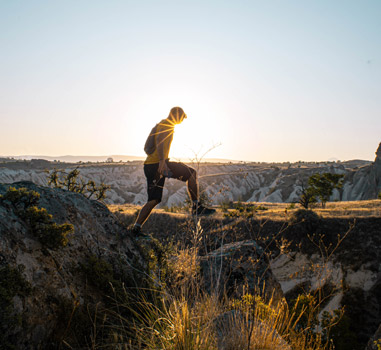
The Luberon Regional Natural Park covers more than 180,000 hectares of preserved nature. Hundreds of kilometers of marked trails cross oak forests, secret combes and ridges offering panoramas over Mont Ventoux and the Alpilles. The Cedar Forest, on little Luberon, offers shaded walking among centenarian trees. For cyclists, the Luberon loop by bike extends over 236 km of marked routes through vineyards and villages. E-bike rentals facilitate climbs.
It is a nature activity in Luberon suited to all profiles!
“I recommend the Mourre Nègre loop, Luberon’s highest point at 1,125 meters. The 360-degree panorama at the summit amply rewards the climbing effort.” – Claire
Luberon is a recognized wine land, with its Luberon and Ventoux AOCs. Many estates open their doors for tastings and wine cellar visits. Regional grape varieties, such as grenache, syrah and vermentino, produce generous red wines and fresh rosés. Several estates also offer picnics in the vineyards or tasting workshops. The wine route connects the main wine-producing villages and easily combines with village visits. It is a discovery of Luberon from a gourmet and convivial angle.
Luberon offers several swimming spots to cool off in summer.
These bodies of water represent a pleasant alternative to the swimming pool.
You now know what to do in Luberon for vacations between nature, heritage and Provençal art of living. Want to complement your discovery days with water-side relaxation time? Book your stay at a camping with water park in the PACA region and fully enjoy Provence!
To enjoy the Luberon's main activities, allow at least 5 days. This gives you time to visit the hilltop villages, walk the Sentier des Ocres, enjoy the markets and hike in the nature park. A week-long stay leaves time to add vineyards and swimming.
The best time to visit the Luberon runs from April to October. Spring offers mild temperatures and blooming nature. Summer lets you enjoy the lavender in June-July and swimming. Autumn charms with its colours and grape harvest, with smaller crowds.
Absolutely. The Luberon is perfect for cycling thanks to a 236 km network of marked routes. Electric bike rentals are available in most villages, making the hills easier to handle. Quiet, shaded back roads run through vineyards and hilltop villages.
Yes, the Luberon suits families well. The Sentier des Ocres, the Colorado Provençal, and swimming at the Étang de la Bonde appeal to children of all ages. Provençal markets and canoe trips on the Sorgue also offer suitable outings. Campsites with a water park round out the family offering.
A car remains strongly recommended for visiting the Luberon. The villages are spread out and public transport is scarce. Cycling is an alternative for the more sporty, but a car remains the most practical way to link the different sites in a single day.